Embedded payments are quickly becoming core infrastructure for modern SaaS platforms. In fact, payment-processing revenue through ISVs has grown roughly 20% annually in the U.S. over the last five years, as more software companies embed payments directly into their platforms.
Embedded payments allow ISVs and SaaS platforms to integrate payment processing directly into their software experience. Modern payment integration platforms combine APIs, terminal support, and payment infrastructure to help software providers manage payments inside a single ecosystem.
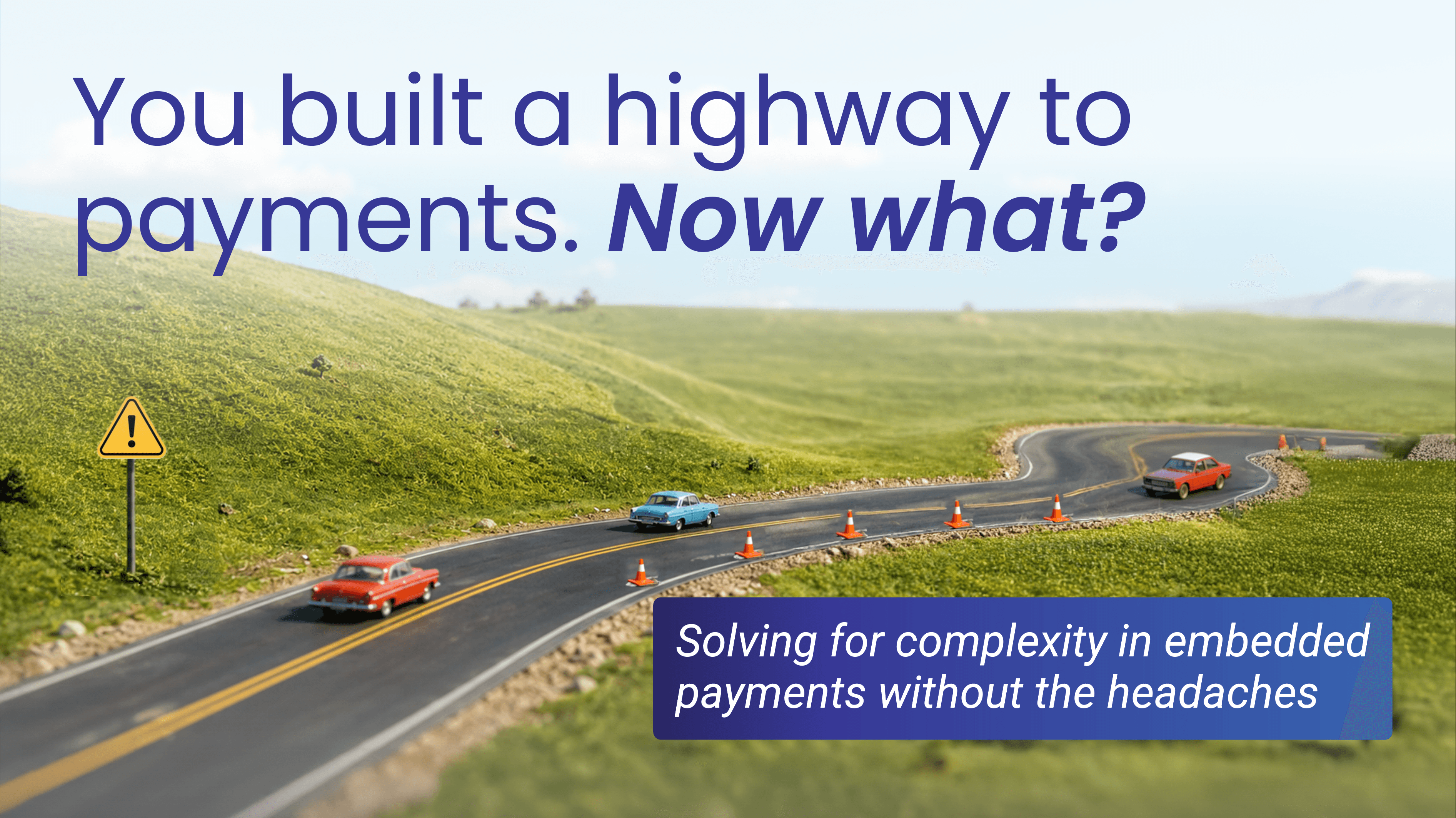
But while integrating payments has become easier, maintaining payment infrastructure at scale is where many platforms run into problems. Because APIs are only the beginning…
Over time, payment operations can introduce:
fragmented workflows
terminal support issues
vendor coordination
infrastructure maintenance
compliance complexity
growing engineering overhead
For many ISVs, payments slowly become a second product to manage.
“How do we embed payments without increasing operational complexity?”
The Real Shift in Embedded Payments
The embedded payments market is projected to grow aggressively over the next several years, driven largely by demand for native, in-platform payment experiences.
The strongest SaaS platforms are no longer asking:
“How do we add payments?”
They’re asking:
“How do we embed payments without increasing operational complexity?”
According to JPMorgan’s 2026 Embedded Payments Report, embedded payments increasingly help SaaS platforms:
deepen customer relationships
create new revenue streams
increase retention
strengthen platform stickiness
Reliability and operational scalability are becoming major differentiators as embedded payments mature.
Why Traditional Payment Integrations Create Long-Term Friction
Most payment providers now offer APIs and SDKs. That’s table stakes. The larger issue is what happens after implementation.
Traditional integrations often leave ISVs responsible for:
maintaining payment workflows
managing infrastructure updates
coordinating hardware support
handling fragmented vendor relationships
scaling payment operations internally
Traditional Payment Integration Model
Initial Benefit | Long-Term Reality |
|---|---|
Fast API access | Ongoing maintenance burden |
Multiple vendor tools | Fragmented workflows |
Payment enablement | Additional operational overhead |
Basic terminal support | Device management complexity |
Separate payment systems | Disconnected customer experiences |
This is where many SaaS platforms start reevaluating their payment stack. Modern users increasingly expect payments to feel fully embedded within the product experience.
What ISVs Should Look for in a Payment Integration Platform
The best payment integration platforms help reduce operational complexity as platforms scale.
ISVs should evaluate:
Embedded payment workflows like in-platform checkout, virtual terminal billing, and card-present payments
Flexible APIs and SDKs that support existing development stacks
Scalable infrastructure that reduces maintenance and operational overhead
Reliable support when payment or terminal issues arise
Omnichannel payment capabilities that create a more unified customer experience
As embedded payments mature, long-term operational efficiency is becoming just as important as implementation speed.
How Payarc Connect Approaches Embedded Payments
Payarc Connect was designed specifically to help ISVs and SaaS providers embed payments directly into their software while reducing long-term operational complexity.
Instead of treating payments as a disconnected layer, Payarc Connect supports multiple payment experiences through a single integration, including:
embedded payments
in-person terminal transactions
virtual terminal workflows
omnichannel payment experiences
Payarc Connect Includes:
REST API-based payment processing
terminal integrations for card-present payments
real-time transaction processing
event-driven architecture
asynchronous notifications/webhooks
sandbox testing environments
PCI-compliant infrastructure managed by Payarc
The platform is also optimized for card-present payments, helping reduce interchange costs and chargeback exposure compared to fully online payment environments. Most importantly, the model shifts more of the infrastructure burden away from the ISV itself.
Payments Are Becoming Infrastructure
The most competitive SaaS platforms increasingly treat payments as part of the product experience itself. That shift is changing how payment platforms are evaluated.
The question is no longer simply:
“Can this integrate?”
It’s:
“Will this scale operationally without slowing us down?”
Because while many payment integrations are easy to launch, the real challenge is maintaining them as your platform grows.
FAQs
What is an embedded payment platform?
An embedded payment platform allows SaaS providers and ISVs to integrate payment processing directly into their software experience.
What should ISVs look for in a payment integration platform?
ISVs should evaluate APIs and SDKs, terminal support, operational scalability, omnichannel capabilities, and long-term infrastructure management.
Why are embedded payments important for SaaS platforms?
Embedded payments help SaaS platforms improve customer experience, create new revenue opportunities, and keep payment workflows inside their ecosystem.